
Excess Baggage Charges in India (2026): How to Avoid High Airport Fees
Avoid high airport fees. Learn the latest excess baggage charges for domestic flights in India, including IndiGo, Air India, and smart ways to save.

We’ve all been there. You’re standing at the check-in counter.
The bag goes on the scale.
It crosses the limit… just slightly.
And suddenly, your travel budget takes a hit.
In India, excess baggage charges are one of the most frustrating hidden travel costs. What looks like a small weight difference can easily turn into a ₹2,000–₹8,000 expense within minutes.
If you travel often or carry more than usual, understanding how these charges work and how to avoid them can save you a significant amount of money.
This guide breaks it down clearly, with practical ways to travel smarter.
Standard Baggage Rules in India (What You Actually Get)
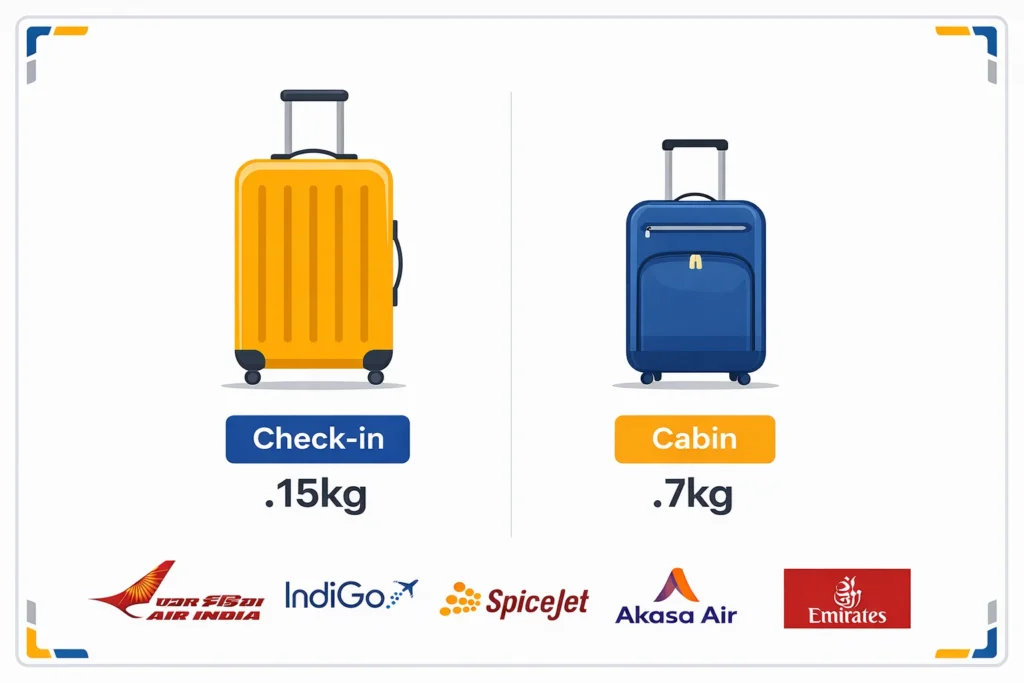
Most domestic airlines in India follow a similar structure:
- Check-in baggage: 15 kg (low-cost carriers)
- Cabin baggage: 7 kg
- Extra items: Laptop bag or handbag (small personal item)
However, there are some differences:
- Air India: Historically known for 25 kg, it now offers a tiered system. Basic Economy tickets often allow only 15 kg, while "Flex" or "Premium" fares go up to 25 kg.
- Budget airlines like IndiGo, SpiceJet, and Akasa Air strictly enforce 15 kg.
This difference alone can impact your decision if you’re carrying heavier luggage.
Airline Excess Baggage Charges in 2026
If your luggage exceeds the limit, airlines charge per kilogram, and the rates are not cheap.
Here are the official pages for reference:
Official Excess Baggage Links
| Airline Name | Official Baggage Page Link |
| Air India | Excess Baggage Guidelines |
| IndiGo | Excess Baggage & Add-ons |
| SpiceJet | Excess Baggage Services |
| Akasa Air | Pre-book Excess Baggage |
| Emirates | Additional Baggage Allowance |
Typical Cost Structure
- ₹600 to ₹700 per kg (plus 5% GST) if paid at the airport counter.
- Pre-booked baggage: Now sold in slabs (e.g., 3kg, 5kg, 10kg), starting at roughly ₹1,650 for 3kg.
For example:
If your bag is 20 kg instead of 15 kg:
- At airport: ~₹3,000+
- If heavier (25–30 kg): ₹6,000 to ₹10,000+
This is where most travellers feel the shock.
Why Excess Baggage Feels So Expensive
It’s not just the cost. It’s the timing.
- You’re already at the airport
- You have no alternative
- You’re forced to pay immediately
This creates a “last-minute penalty effect”, where airlines charge premium pricing because there’s no room for decision-making.
The Biggest Mistake Travellers Make
Waiting at the airport.
Most airlines allow you to pre-book extra baggage online.
This is always cheaper.
Price Difference Example
| Scenario | Cost |
| Pre-book 5 kg | ₹1,800–₹2,200 |
| Pay at the airport | ₹3,000+ |
That’s almost 50% higher for the same weight.
Still, even pre-booking adds up quickly if you’re carrying a lot.
The Hidden Trap: Cabin Baggage Checks
Many travellers try to avoid charges by shifting weight into cabin bags.
Airlines have adapted.
Now:
- Cabin bags are checked at the boarding gate
- Overweight bags are forced into the check-in
- Additional penalty fees are applied
Airlines now strictly enforce a single-piece cabin rule. A laptop bag, camera, or handbag is no longer a free extra; it must fit inside your main 7 kg cabin bag.
If you carry two separate bags at the gate, you may be asked to check one in and pay a gate baggage fee. This is often the most expensive scenario.
International + Domestic Connection Problem
This catches a lot of people.
Example:
- Flight 1: London → Delhi (30 kg allowance)
- Flight 2: Delhi → Jaipur (15 kg allowance)
If booked separately:
You pay for the extra 15 kg on the domestic travel
Even though your international ticket allowed it.
Solution:
- Book under a single PNR, or
- Pre-plan baggage for the domestic flight
When Airline Baggage Stops Making Sense
Let’s look at a realistic situation:
You’re travelling with:
- 2 suitcases
- Total weight: 30 kg
Airline cost:
- Extra 15 kg → ₹8,000 to ₹10,000
Now compare that with a smarter alternative.
A Smarter Way to Handle Extra Luggage
Instead of paying high airline charges, many travellers now:
- Send their luggage separately
- Travel light with just essentials
This completely changes the experience.
Benefits:
- No baggage stress at the airport
- No long check-in queues
- No waiting at the baggage carousel
- No last-minute charges
You simply move freely, while your luggage reaches your destination.
If you want to understand how this works, read our guide on airport luggage delivery services in India.
Who Benefits the Most from This Approach
- Students Moving Cities: Carrying 2–3 bags for college relocation becomes expensive on flights.
- Families Travelling Together: More members = more luggage = higher cost risk.
- Long-Stay Travellers: If you're travelling for weeks, your luggage weight naturally increases.
- Senior Citizens: Handling heavy bags is physically exhausting.
- Digital Nomads: Extra gear, like laptops, accessories, etc., adds weight quickly.
Typical Cost Structure for Excess Baggage
Let’s break it down clearly:
| Airline | Check-in (Base) | Cabin (Max 1 Piece + Personal*) | Airport Excess (per kg) |
| IndiGo | 15 kg | 7 kg (+3 kg small item) | ₹600 + GST |
| Air India | 15-25 kg* | 7 kg | ₹600 + GST |
| Akasa Air | 15 kg | 7 kg | ₹700 + GST |
| SpiceJet | 15 kg | 7 kg | ₹700 + GST |
The more weight you carry, the more sense it makes to avoid airline charges.
Simple Ways to Avoid Excess Baggage Charges
- Weigh Your Bags Before Leaving: A ₹300 luggage scale can save thousands.
- Pre-book Extra Weight: Always cheaper than airport pricing.
- Use Baggage Pooling: Travelling with someone? Combine allowances.
- Wear Heavy Items: Jackets, shoes, and electronics can reduce bag weight.
- Plan Luggage Movement in Advance: Instead of reacting at the airport, plan before travel.
A Shift in How People Travel
Travel behaviour is changing.
Earlier: People carried everything with them
Now: People optimise for convenience and flexibility
This is similar to how:
- Online check-in replaced queues
- Cab apps replaced waiting for taxis
Handling luggage separately is becoming a natural extension of this shift.
How This Improves Your Travel Experience
Instead of focusing only on cost, think about experience:
- You move faster through airports
- You avoid physical strain
- You reduce travel stress
- You start your journey comfortably
For many travellers, this matters more than just saving money.
Final Thoughts
Excess baggage charges in India are not going away.
If anything, they are becoming stricter and more expensive.
The key is not just avoiding fees, it’s changing how you approach luggage altogether.
If you plan ahead, you can:
- Save thousands of rupees
- Avoid last-minute stress
- Travel more comfortably
Explore a smarter way to handle luggage with our airport luggage delivery service.